
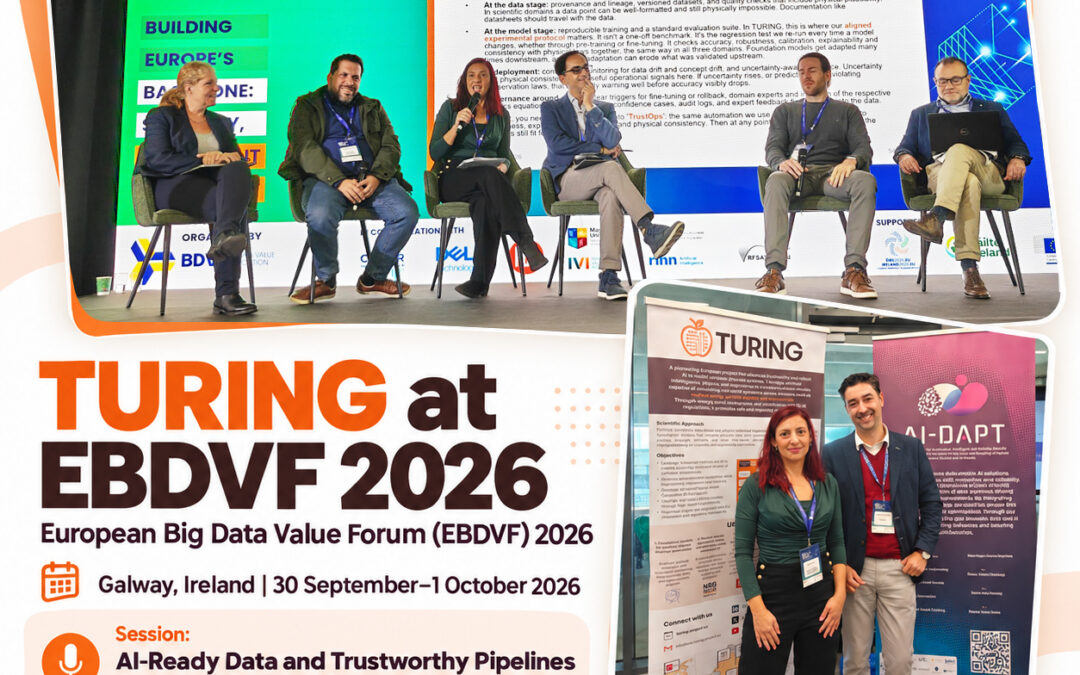
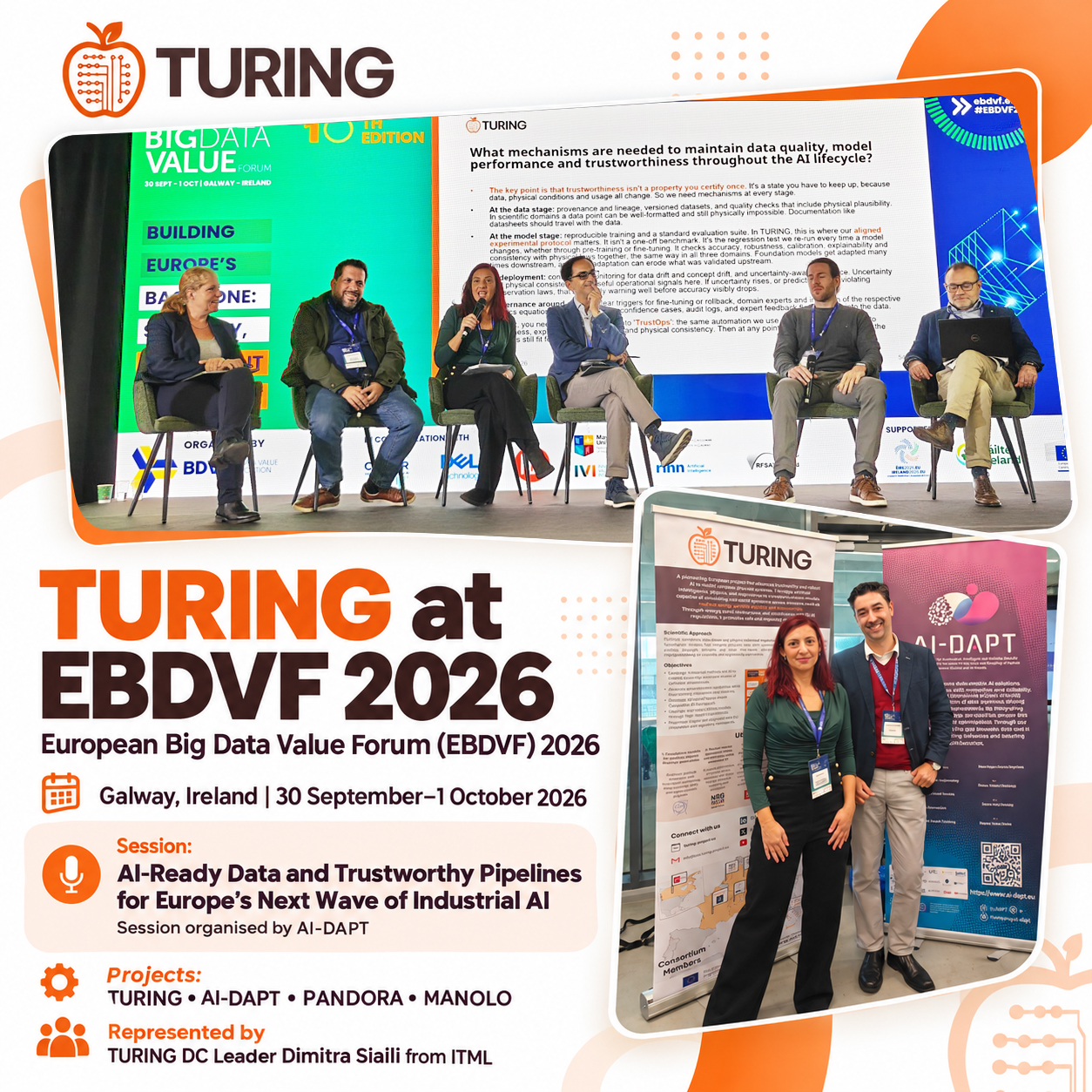
TURING participated in the European Big Data Value Forum (EBDVF) 2026, held on 30 September–1 October in Galway, Ireland. Organised by the Big Data Value Association (BDVA), EBDVF is a flagship European event bringing together research, industry and policy stakeholders around Data and AI. The 2026 edition focused on “Building Europe’s AI and Data backbone: Strategy, Investment and Impact.”
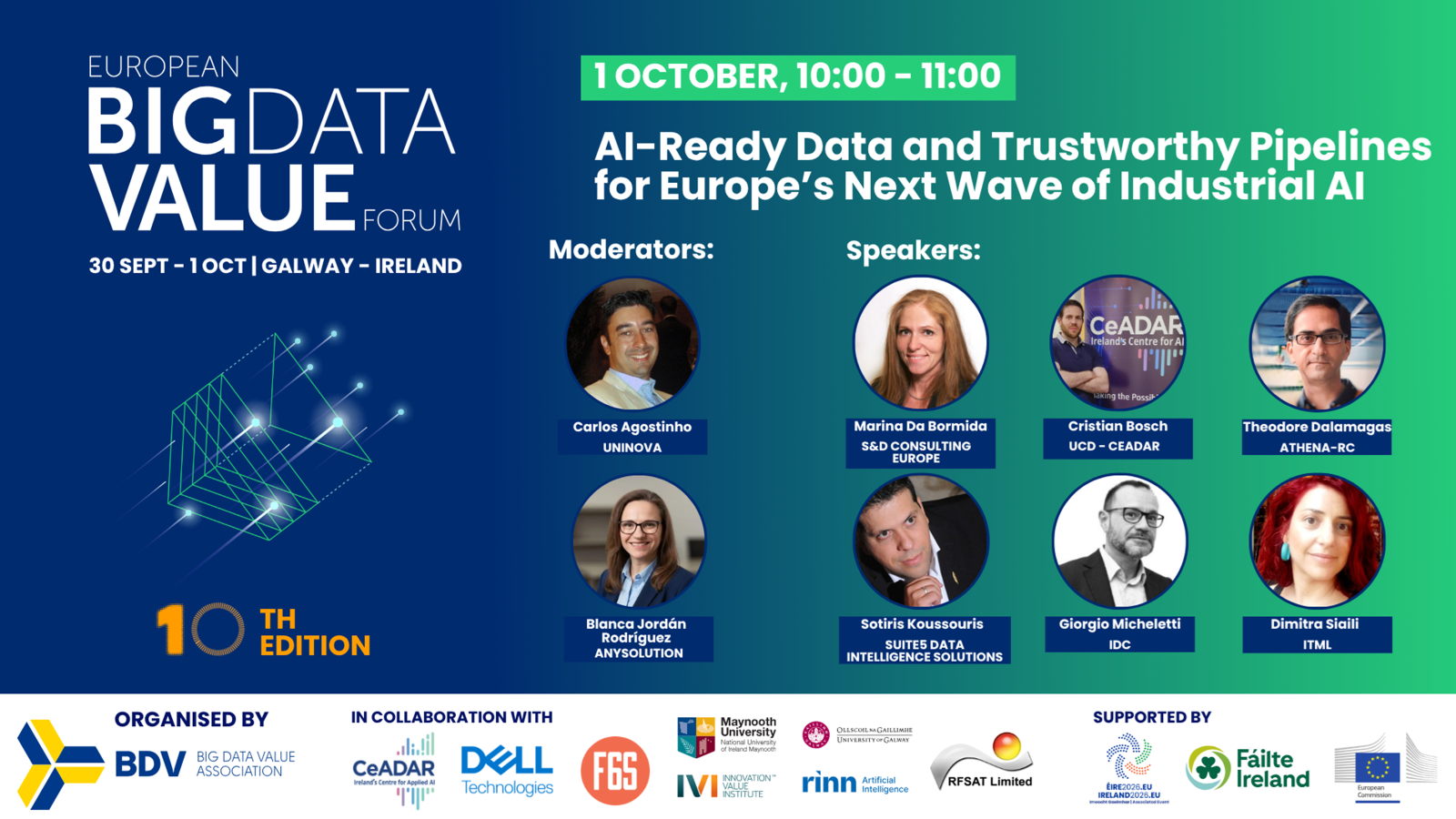
On 1 October, TURING joined the session “AI-Ready Data and Trustworthy Pipelines for Europe’s Next Wave of Industrial AI”, organised by the AI-DAPT project under the Data Labs / AI-ready data track. The session explored how Europe can move from AI-ready data towards trustworthy AI operations, addressing data quality, pipeline orchestration and reuse, human oversight, lifecycle monitoring and deployment. The session also featured a contribution from Blanca Jordán Rodríguez (ANYsolution) on the BDVA etami Task Force (ethical and trustworthy artificial and machine intelligence), which focuses on advancing trustworthy and ethical AI and translating related principles into practical approaches, tools and methods.
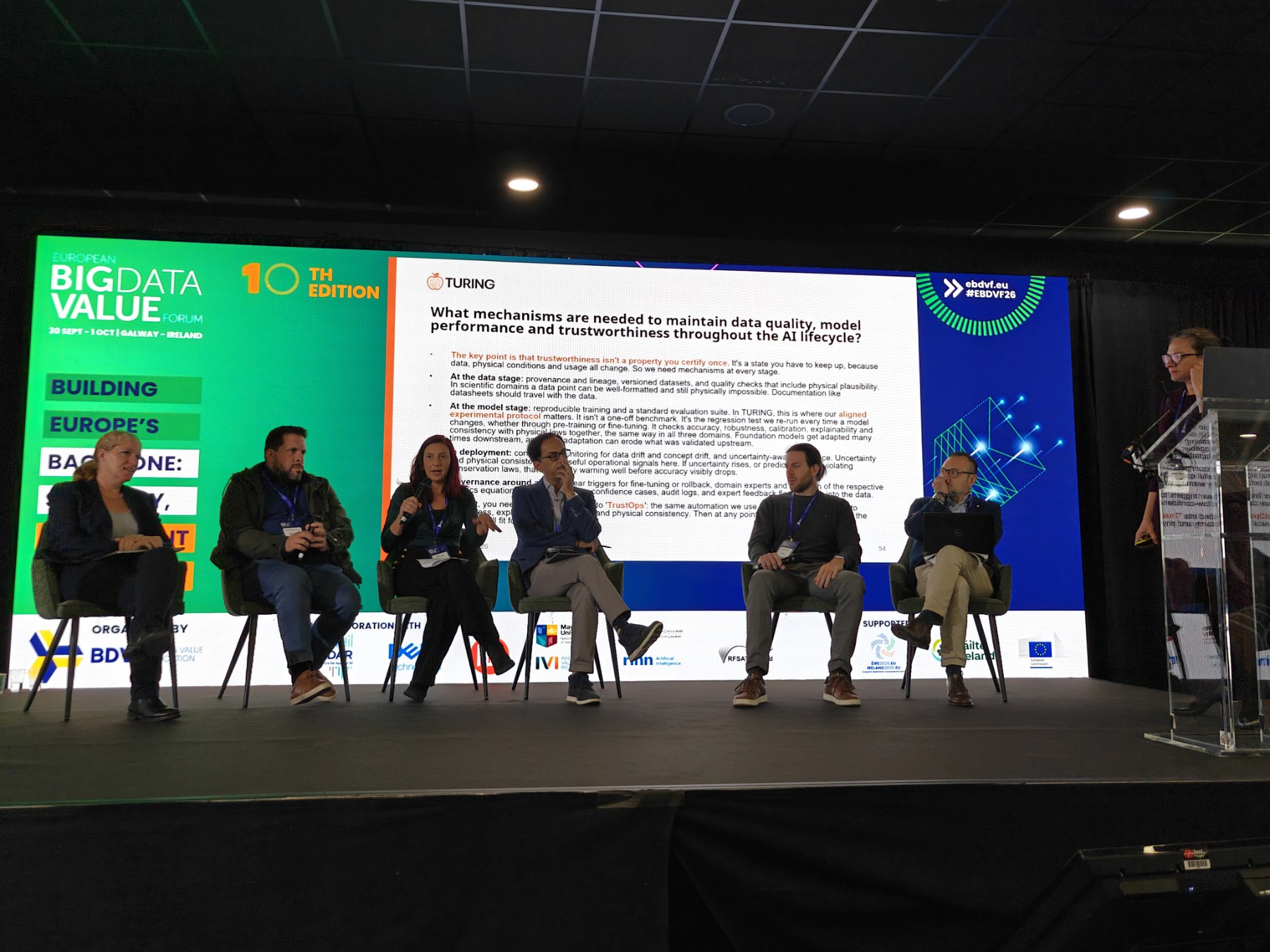
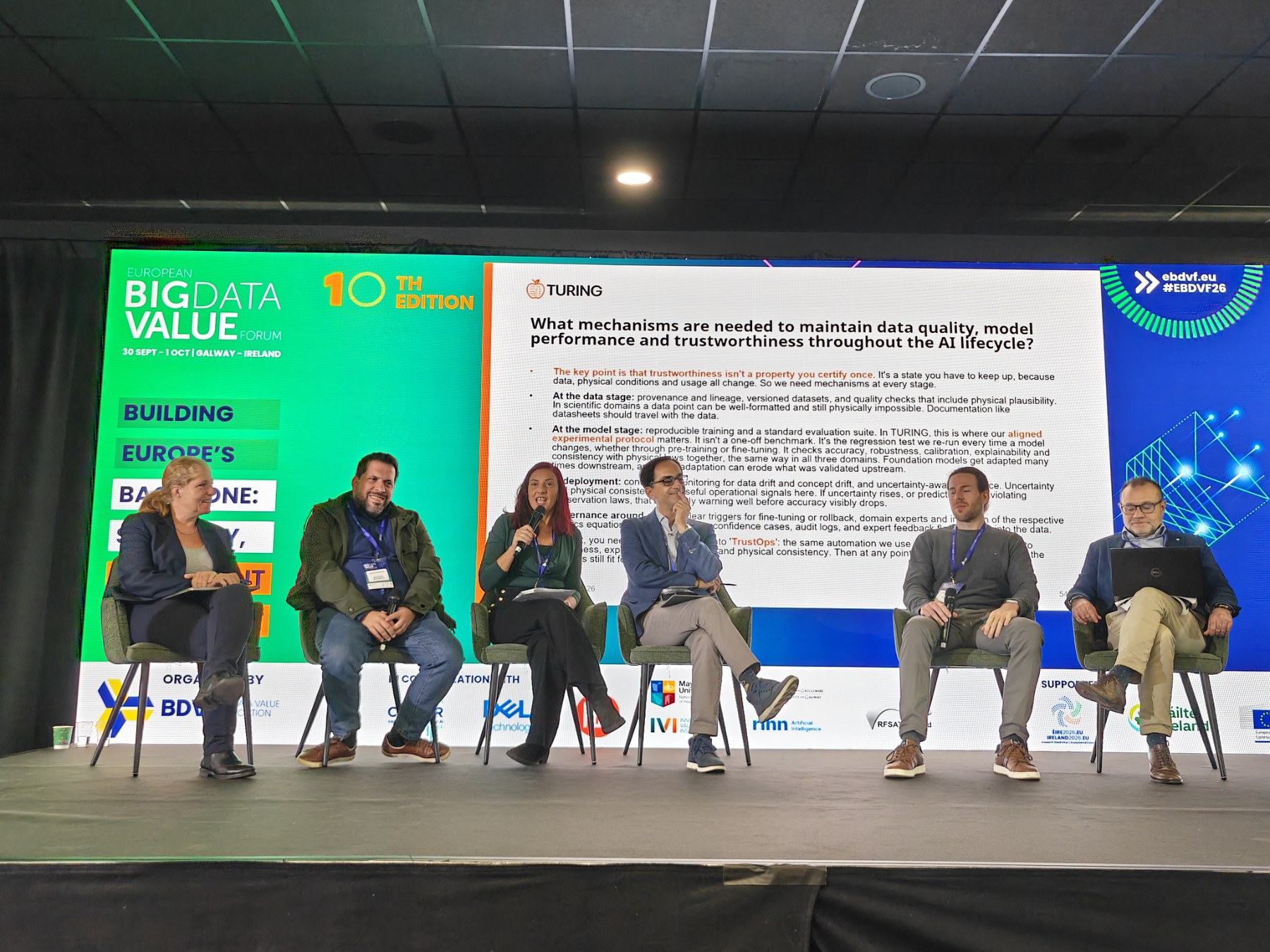
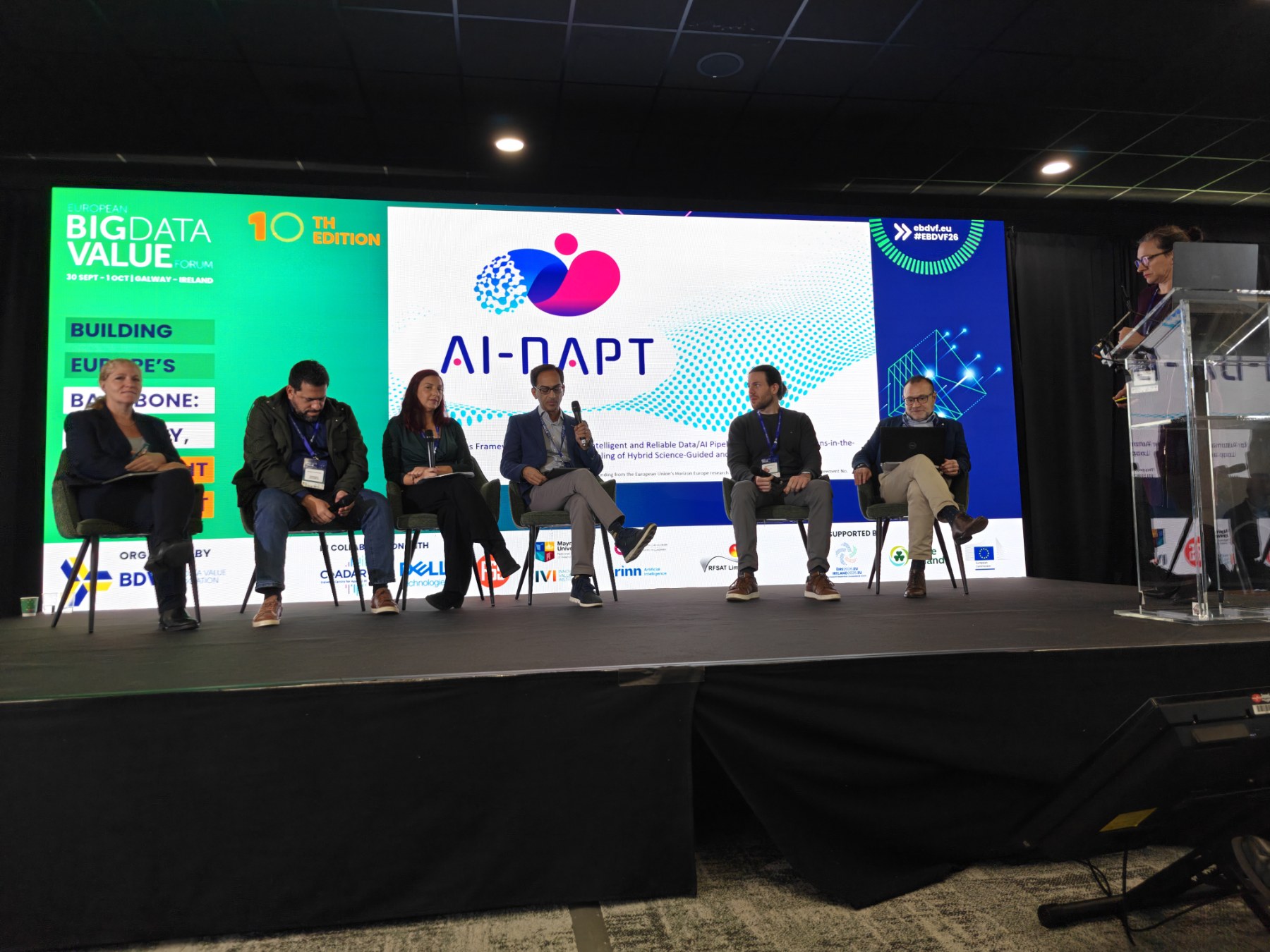
TURING was represented by Dimitra Siaili from ITML, DC leader of the project, who joined the panel discussion “From AI-Ready Data to Trustworthy AI Operations” together with representatives of AI-DAPT, PANDORA and MANOLO. The joint panel provided an important opportunity for the projects to compare their approaches, identify shared challenges and discuss complementary pathways towards the deployment of trustworthy AI at scale.
The discussion addressed three central questions: how regulatory and ethical requirements can be translated into concrete technical mechanisms; how data quality, model performance and trustworthiness can be maintained throughout the AI lifecycle; and which technical and organisational barriers still hinder large-scale adoption.
From the TURING perspective, trustworthiness by design means treating regulatory requirements as part of the engineering process rather than as an additional compliance layer introduced at the end. TURING highlighted four closely connected dimensions of trustworthy AI for physical systems: explainability, uncertainty quantification, robustness and consistency with physical laws: A model that is accurate on average but breaks the physics is not trustworthy. The project also stressed the role of domain experts, calibrated uncertainty estimates and physics-based evaluation in ensuring that model outputs can be meaningfully assessed in scientific and engineering environments.
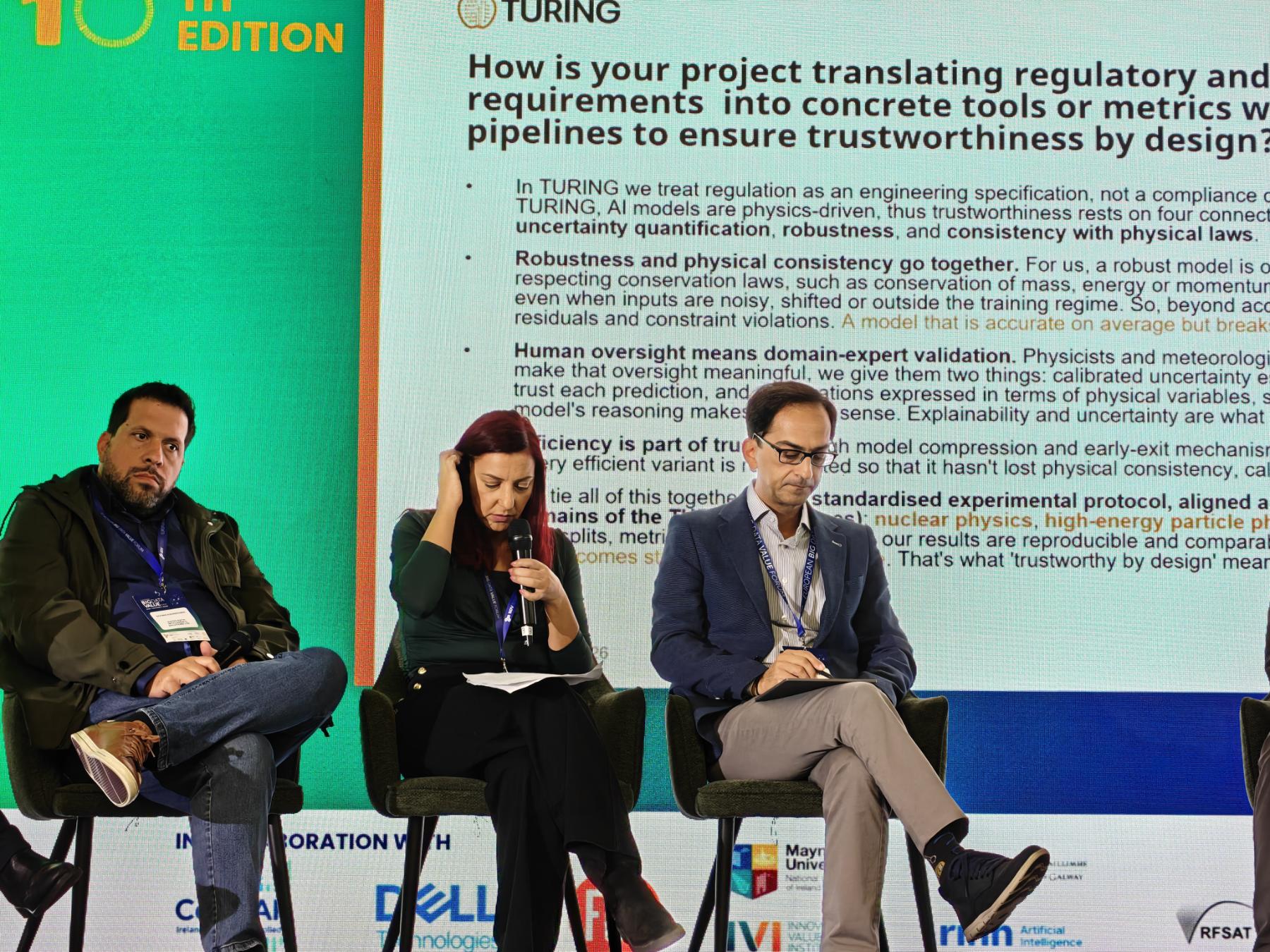
TURING also presented its lifecycle-oriented perspective on trustworthiness. Trustworthiness isn’t a property you certify once. It’s a state you have to keep up, because data, physical conditions and usage all change. So we need mechanisms at every stage.
This includes data provenance and lineage, versioned datasets, physically informed quality checks, reproducible training and evaluation, continuous monitoring for data drift, concept drift, and uncertainty-aware inference as well as governance mechanisms for fine-tuning, rollback and expert intervention. This broader approach extends conventional MLOps towards what TURING described as “TrustOps”, where robustness, explainability, uncertainty and physical consistency are continuously monitored alongside model performance.
The panel further highlighted common barriers faced by European AI projects, including fragmented data, the lack of common metrics and experimental protocols, computational cost, limited generalisation across domains, skills gaps, regulatory uncertainty and the transition from research prototypes to operational systems. TURING stressed the importance of standardised experimental protocols, as pursued within TURING across its application domains, open evaluation tools and benchmarks, and regulatory sandboxes as important enablers for wider adoption.
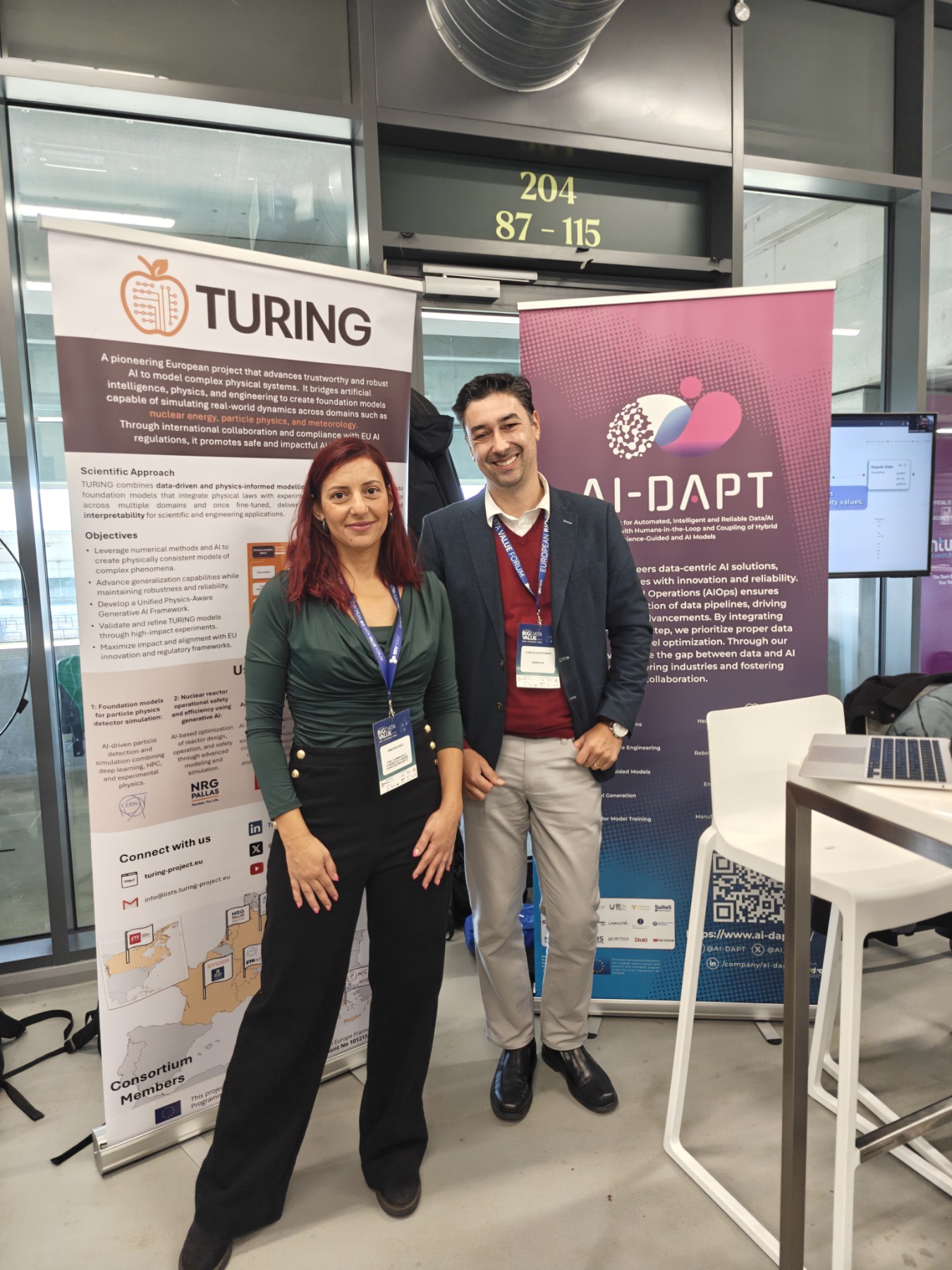
Beyond the technical discussion, the session demonstrated the value of cross-project collaboration. Bringing AI-DAPT, PANDORA, MANOLO and TURING around the same table enabled the projects to exchange experience across different application contexts while addressing a shared European challenge: how to transform advanced AI research into systems that remain reliable, understandable and trustworthy throughout their lifecycle.
For TURING, participation in EBDVF 2026 therefore represented more than a dissemination opportunity. It contributed to strengthening connections with complementary European initiatives, identifying areas of common interest and reinforcing collaboration within Europe’s wider AI and Data ecosystem.
More information: https://european-big-data-value-forum.eu/2026-edition/programme/