20–21 July 2026 | Heraklion, Greece
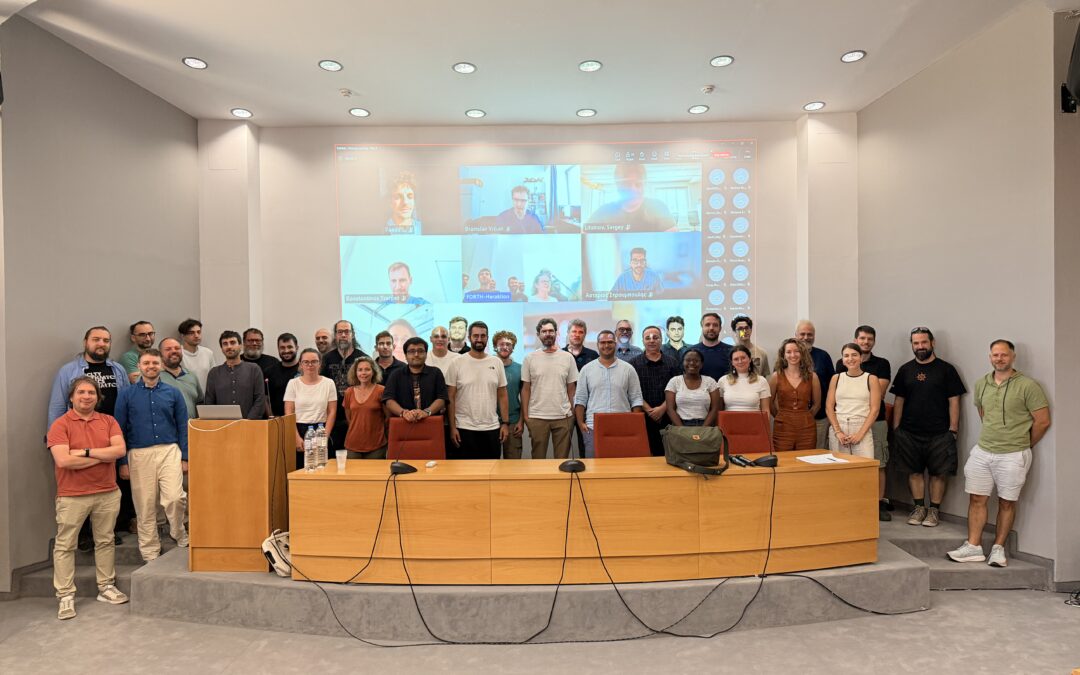
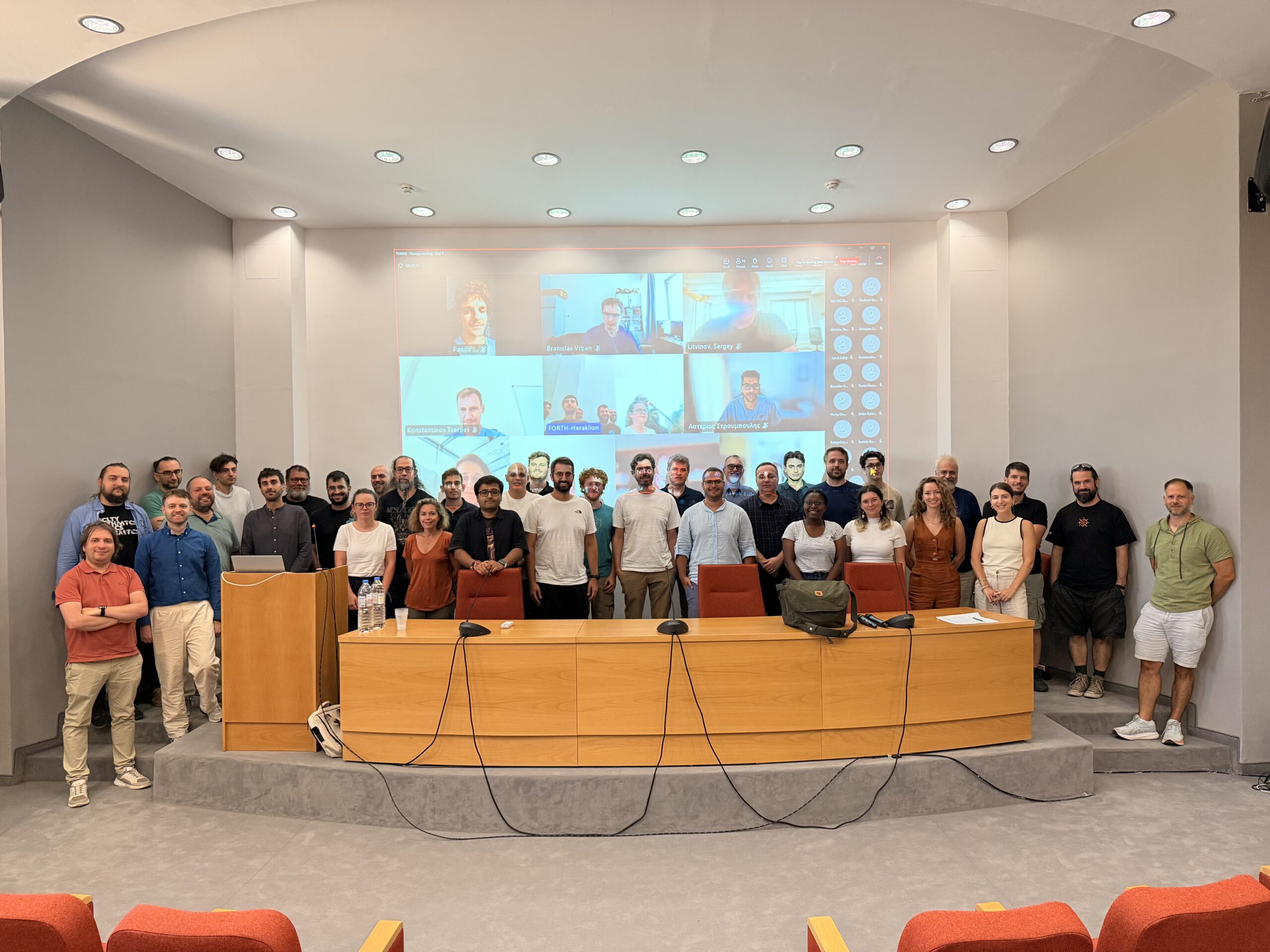
The TURING consortium met in Heraklion, Greece, on 20–21 July 2026 for a two-day Plenary Meeting dedicated to reviewing the project’s progress, strengthening technical coordination and defining the priorities for the next phase of implementation.
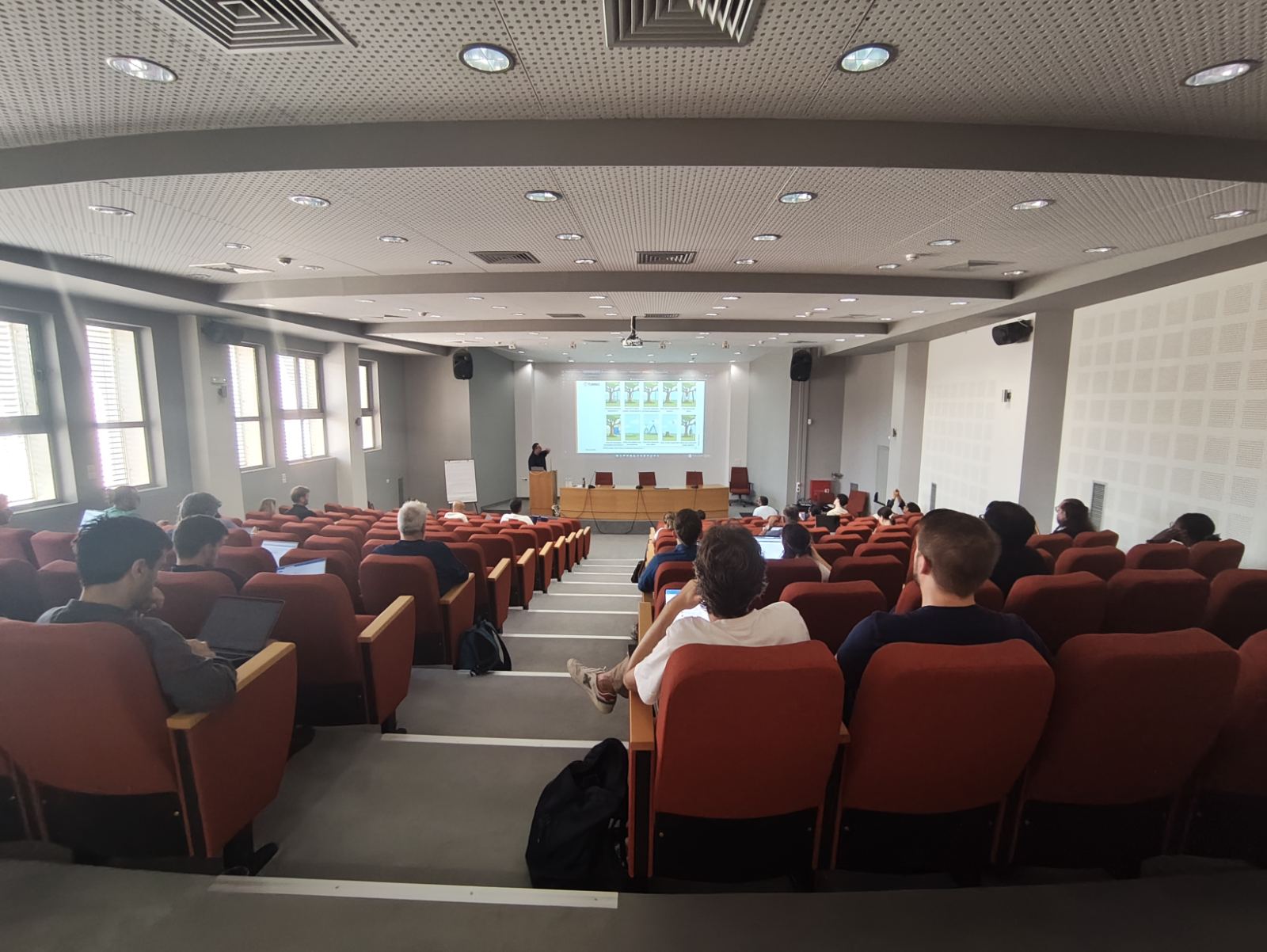
Hosted by IACM-FORTH at the Eastern FORTH Building Auditorium, the meeting brought together project partners for detailed discussions on the development and integration of the TURING Framework. Particular emphasis was placed on ensuring consistency between the project’s technical and user requirements, the overall system architecture, the individual technical components and the needs of the targeted use cases.
From requirements to an integrated TURING Framework
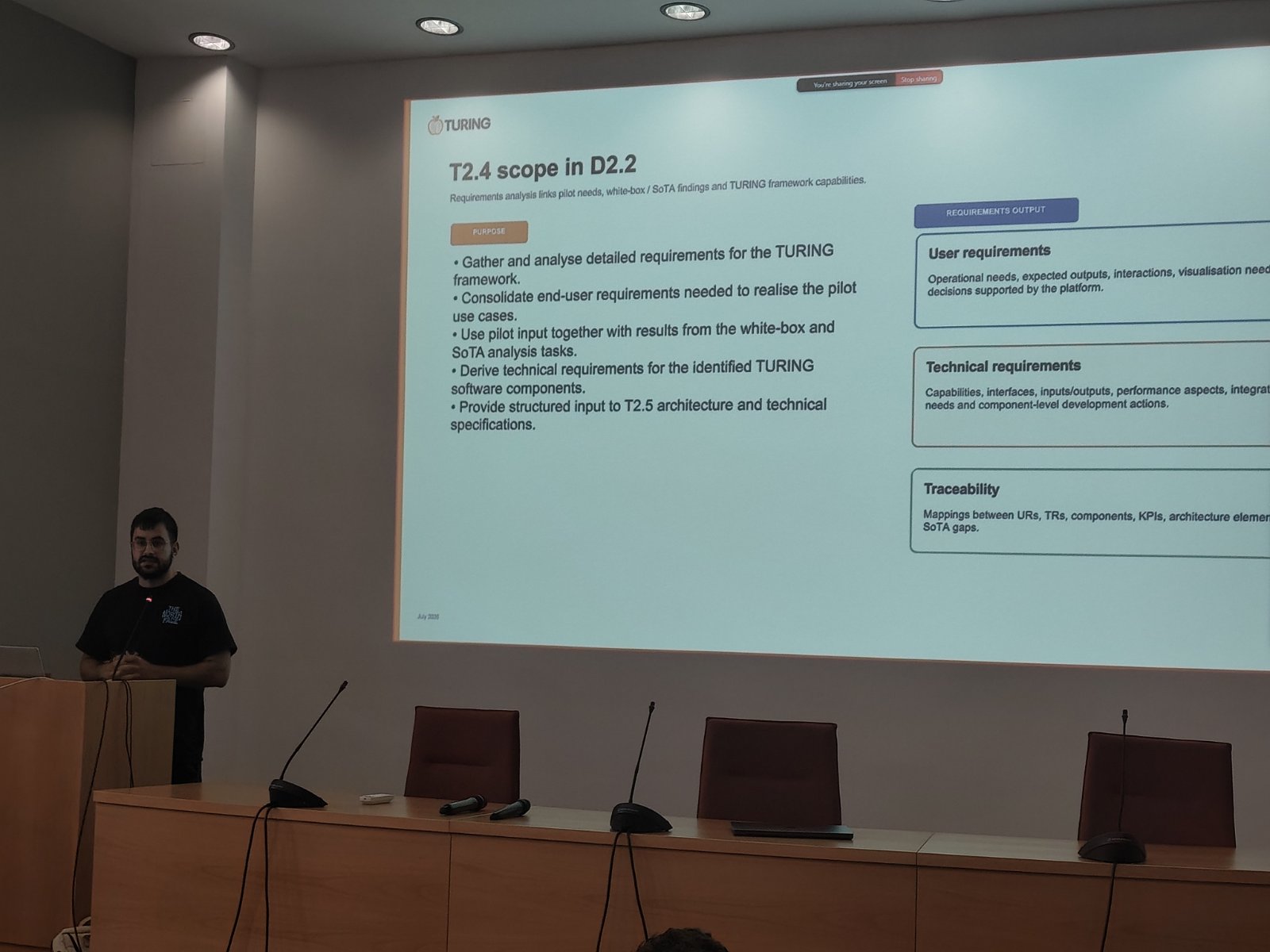
The first day focused primarily on the technical foundations of the project. Partners reviewed the methodology followed to collect and analyse the requirements of the TURING use cases, including the interaction between technology providers and use-case partners, the availability and characteristics of the relevant datasets, and the capabilities expected from the project’s technical solutions.
The consortium then examined the TURING Framework architecture and its technical specifications. Discussions addressed how the architecture responds to the identified user and technical requirements, how the project components are positioned across the training, fine-tuning and inference stages, and how the architecture can be adapted to the specific needs of each use case.
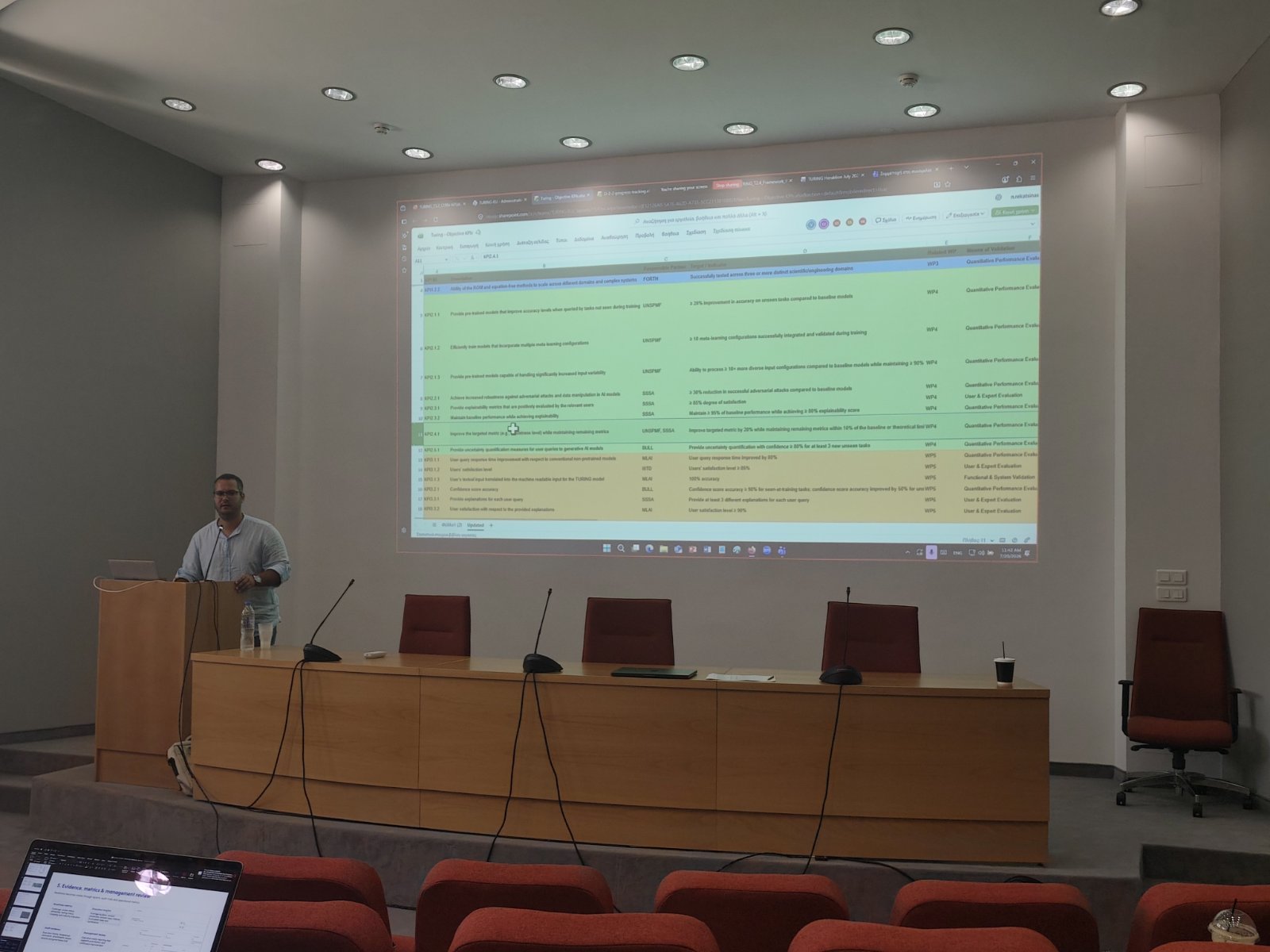
The meeting also covered the allocation of project KPIs and the definition of evaluation metrics, supporting a more systematic assessment of the Framework and its components during the forthcoming implementation and experimentation activities.
Technical components, integration and implementation planning
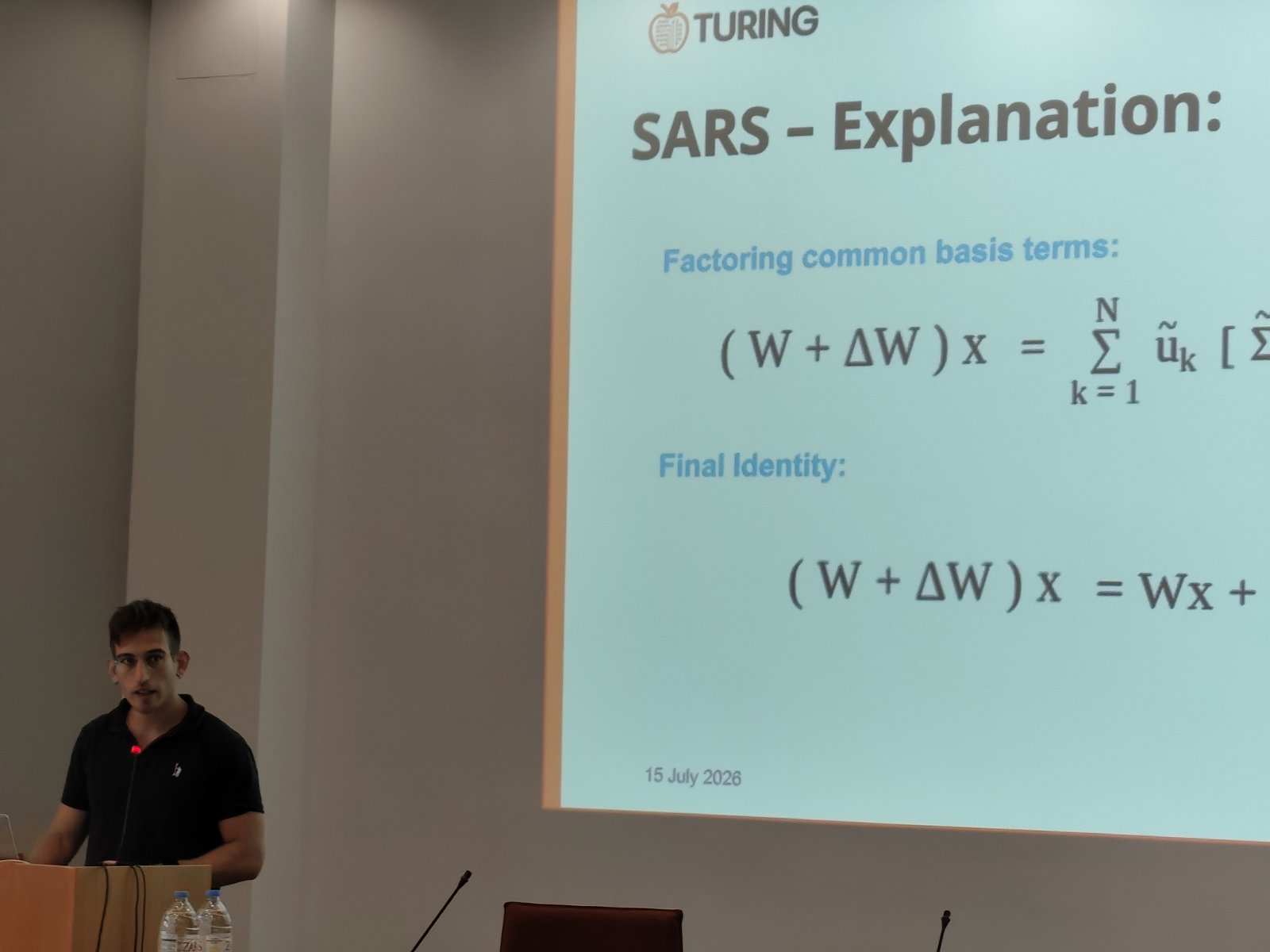
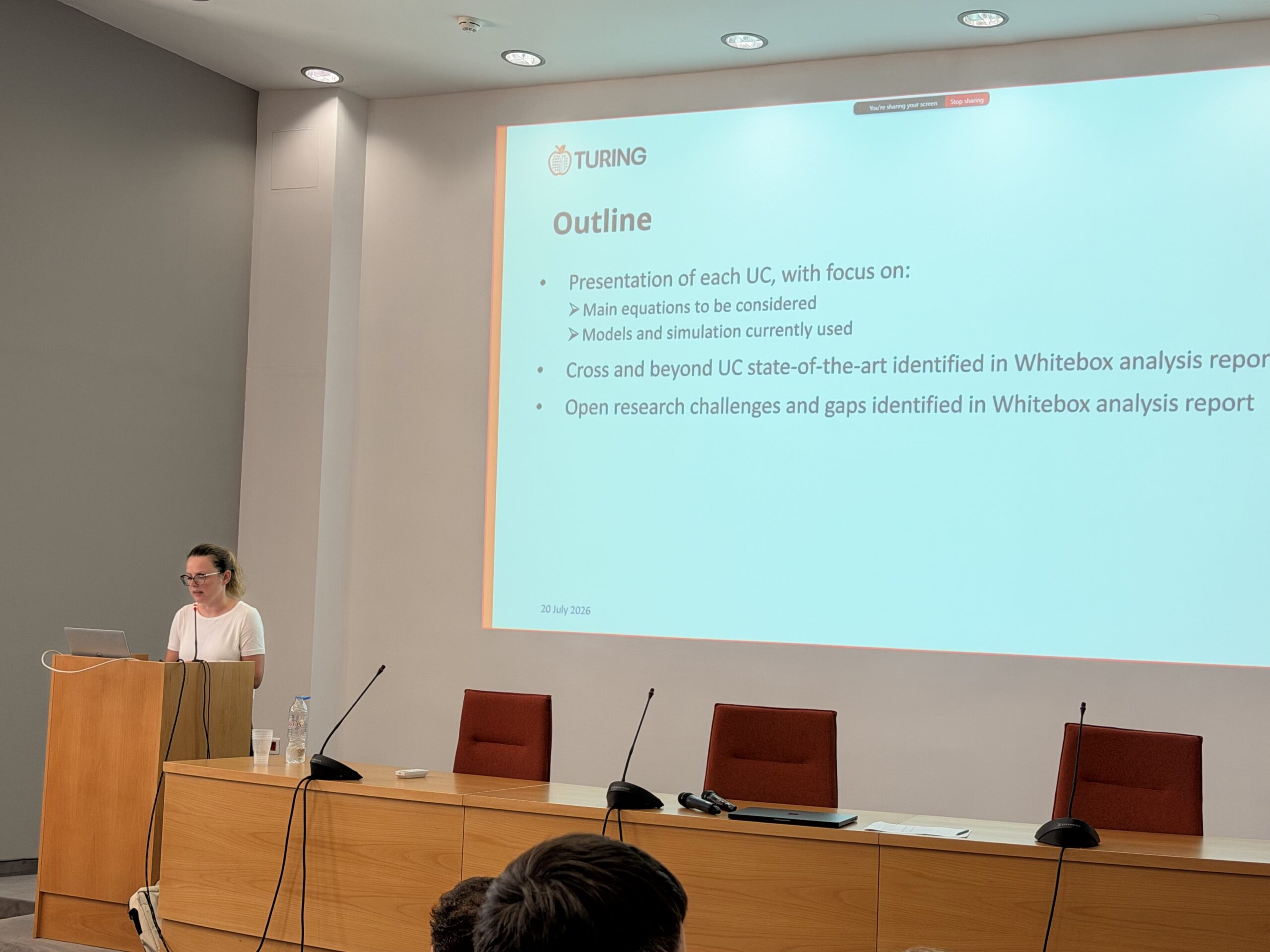
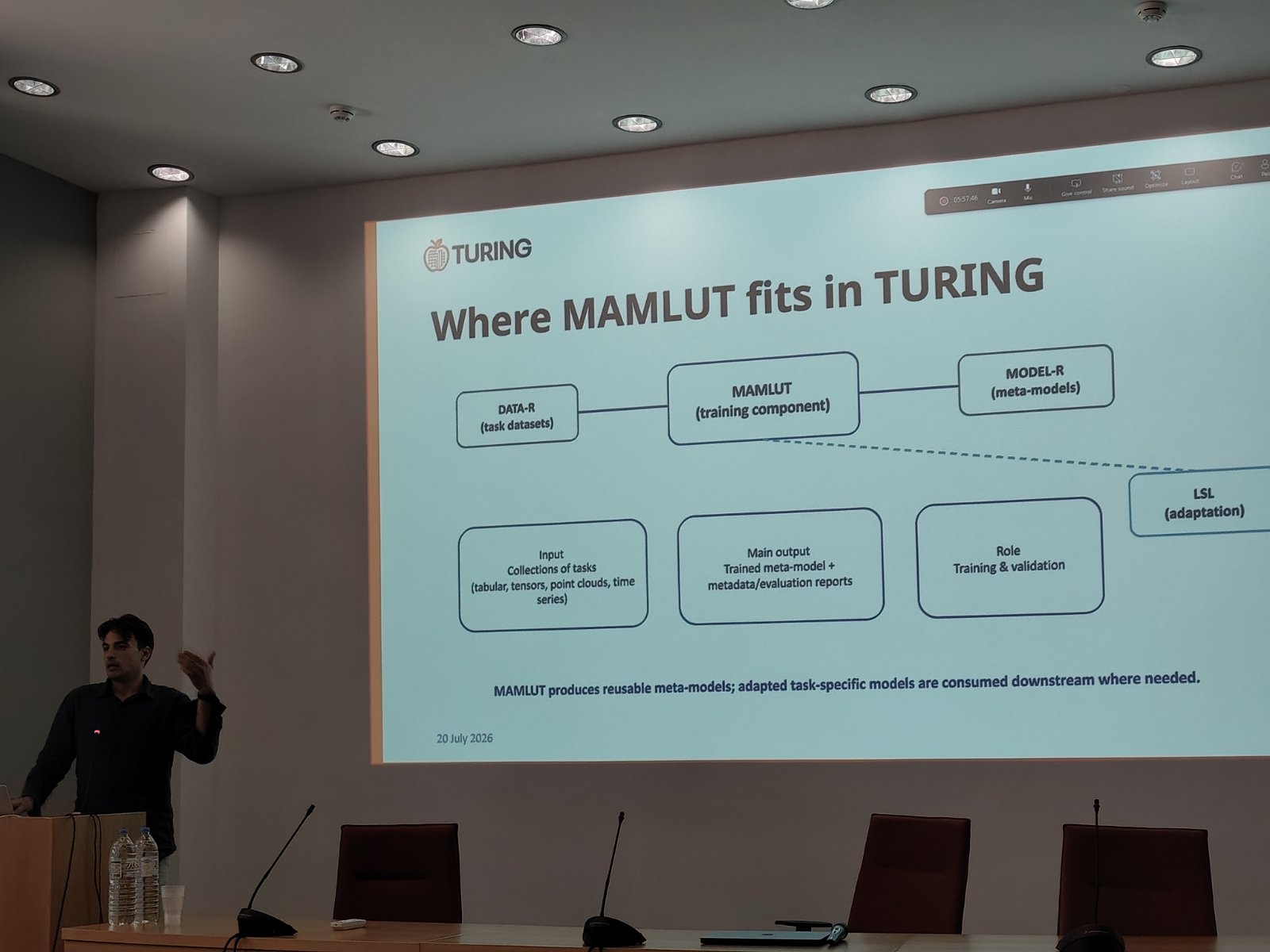
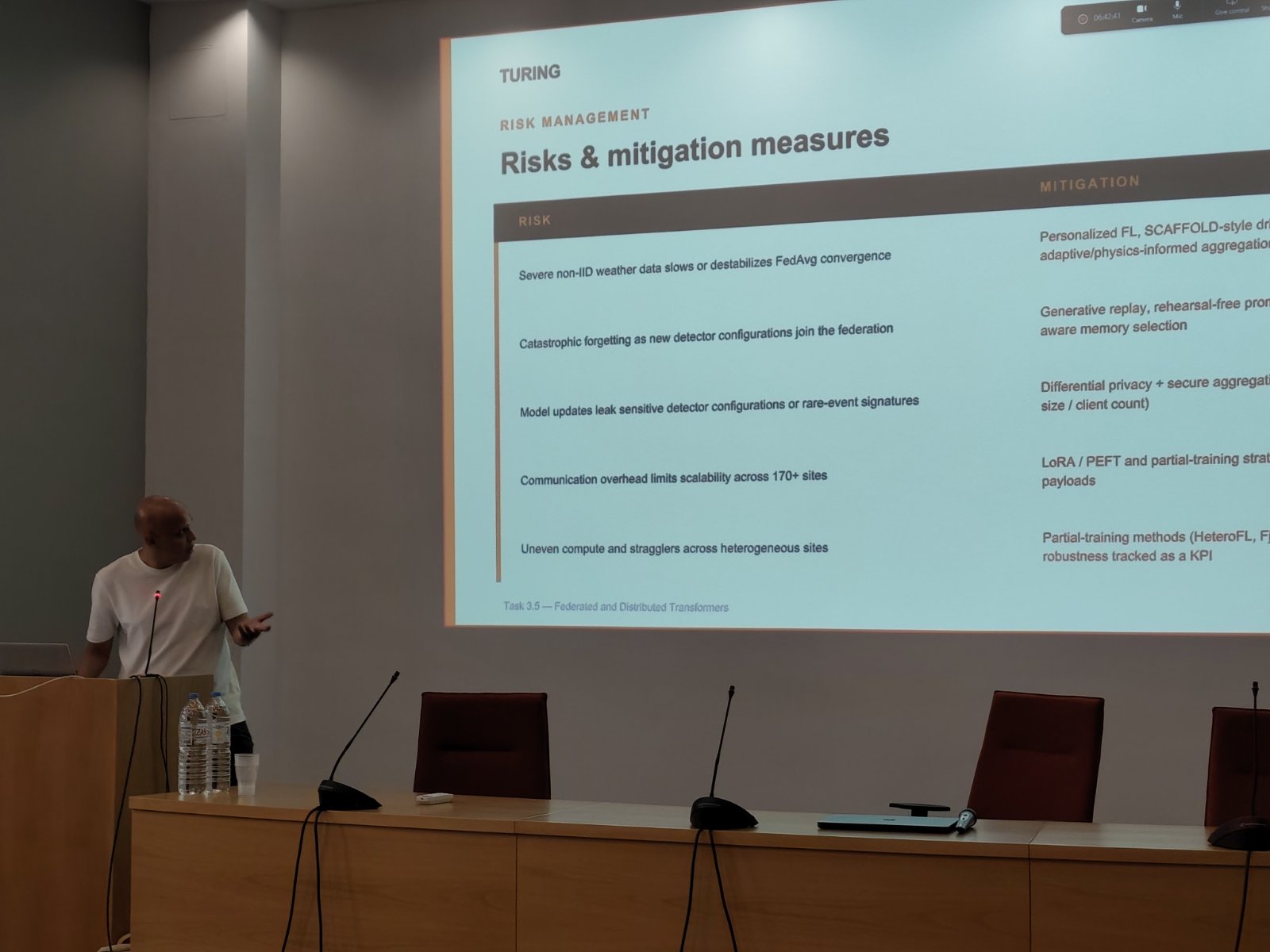
A substantial part of the agenda was dedicated to the components developed within the project’s technical work packages. Component owners presented their respective solutions, explaining their intended functionality, inputs and outputs, position within the TURING architecture, links to the use cases and user requirements, and the research gaps they aim to address.
The presentations also provided an opportunity to assess the current implementation status of each component, identify technical dependencies and discuss potential risks and mitigation measures. This component-level analysis was essential for clarifying interfaces between the different solutions and establishing a shared understanding of how they will contribute to the integrated TURING Framework.
The discussions covered components related to foundation-model development and adaptation, federated and distributed learning, uncertainty quantification, explainability, robustness assessment, efficient computation, model and data repositories, decision-support services and the project’s user-facing portal.
Ethics, data management and preparation for experimentation
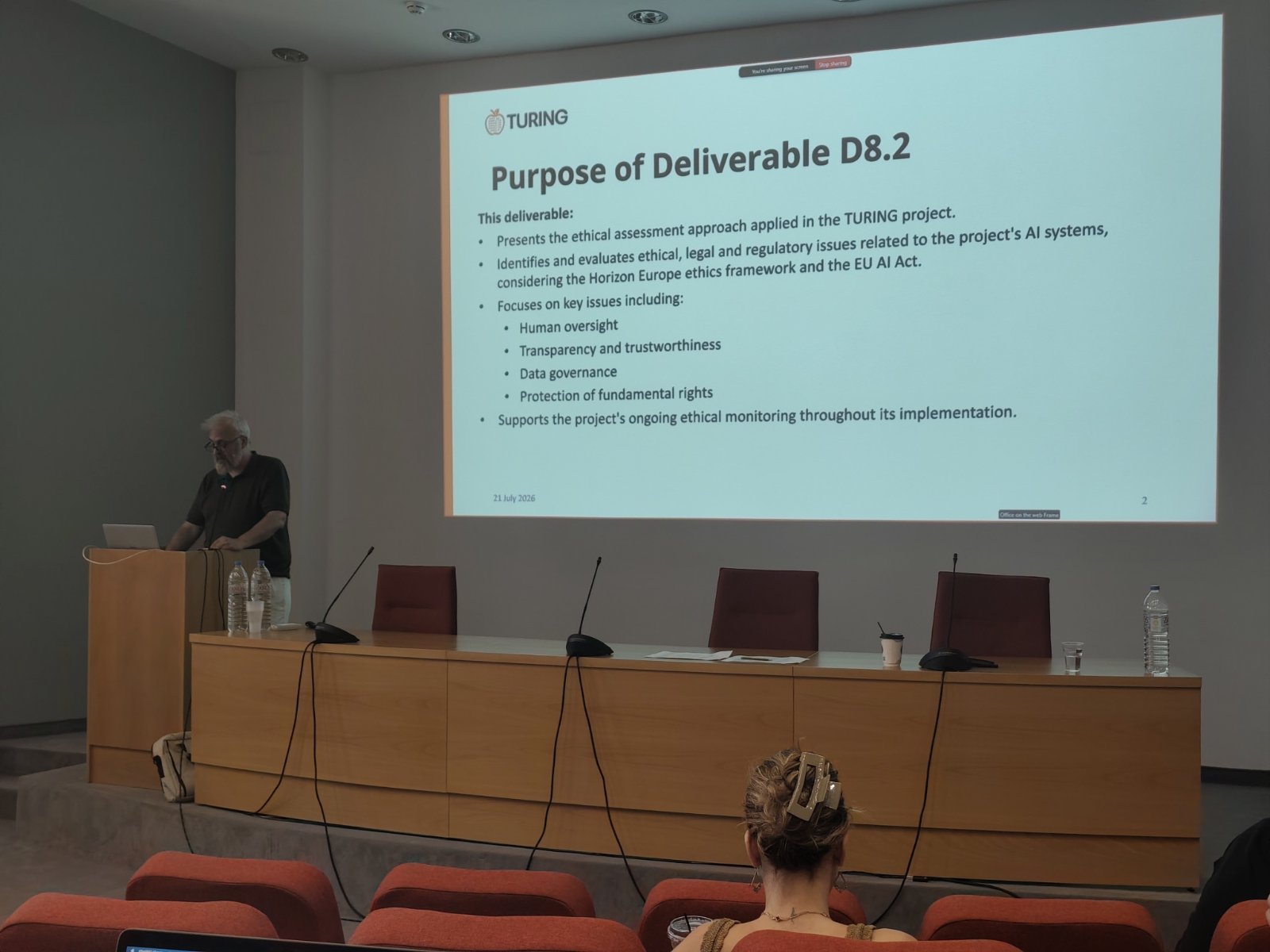
The second day addressed several cross-cutting aspects of the project. The consortium reviewed the project’s ethics requirements and its compliance with relevant ethical principles and legislation, including considerations related to the involvement of end users and human participants.
Partners also discussed data requirements, data availability and the implementation of the project’s Data Management Plan. Particular attention was given to the datasets supporting the use cases, their availability within the project infrastructure and continued compliance with the applicable legal and ethical requirements.
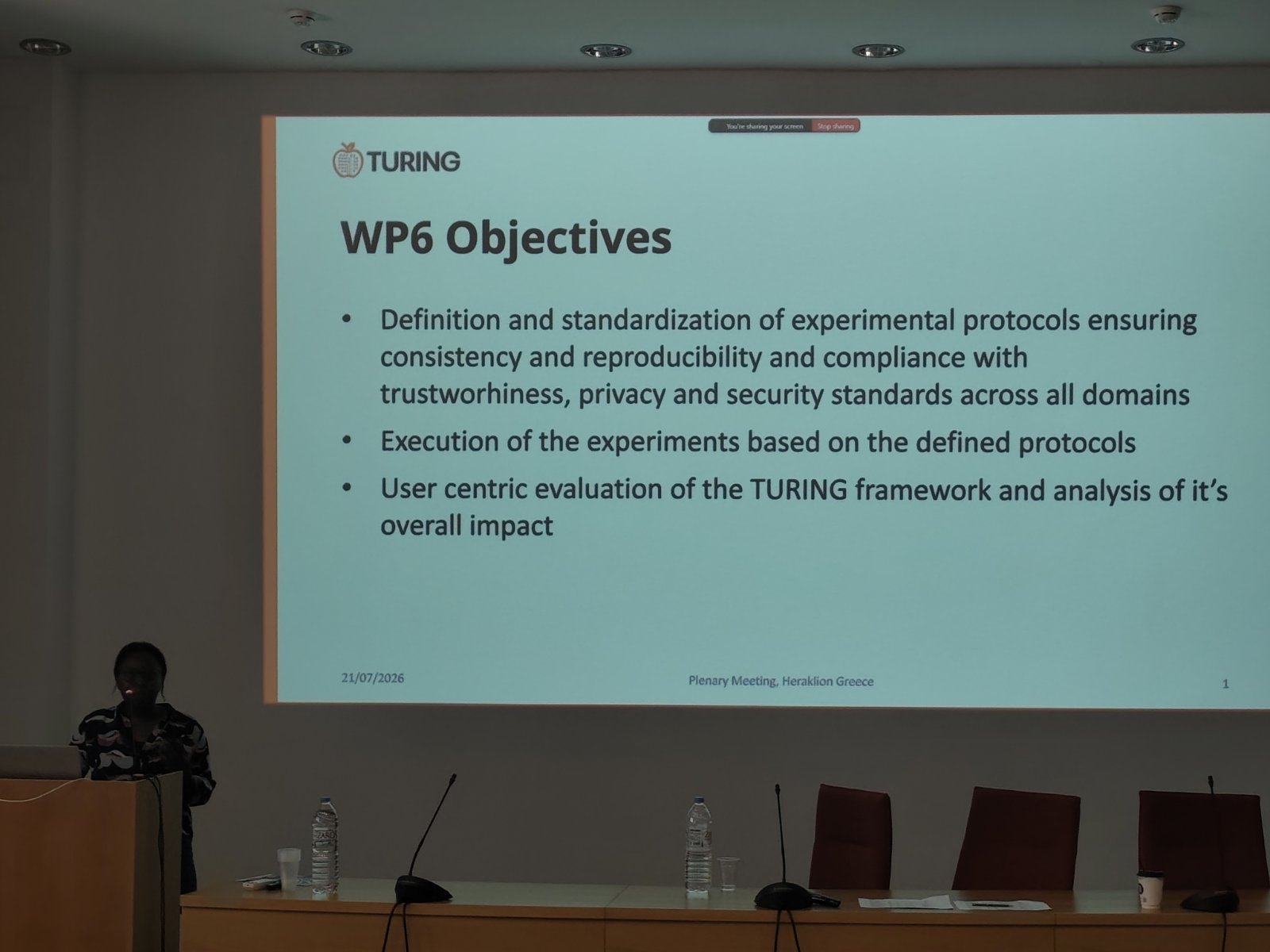
Looking ahead to the experimental phase, the consortium initiated the planning of the activities that will validate the TURING Framework across the project’s targeted application domains. Discussions focused on the need for a standardised experimental approach, common evaluation methodologies, reproducible procedures and appropriate metrics and benchmarks.
Communication, exploitation and preparation for the next project phase
The meeting additionally reviewed progress in communication, dissemination and exploitation activities. Partners assessed the work completed to date, considered possible deviations or emerging risks, and discussed an action plan for the project’s second year.
The consortium also began preparing for the forthcoming project review, with particular attention to the technical and ethical dimensions of the work. The final sessions were used to consolidate follow-up actions, clarify responsibilities and establish priorities for the months ahead.
The Heraklion meeting marked an important step in moving TURING from architectural definition and component development towards integration, experimentation and validation. By aligning the consortium around a common technical roadmap, the meeting strengthened the basis for delivering robust, trustworthy and reusable AI-driven solutions for complex scientific and engineering applications. The project develops generative and multimodal foundation models and an accompanying framework targeting domains including nuclear energy, particle physics and meteorology.
TURING warmly thanks all partners for their active participation and constructive contributions, as well as IACM-FORTH for the excellent organisation and hospitality in Heraklion.